

Several weeks ago, in our continued exploration of web accessibility best practices, we shared an overview of the understandable principle. Today, in part four of our series, we’re exploring the final principle of the WCAG 2.0: robust.
Website Accessibility Principle #4: Robust Read More
Category: Website Design

Website Accessibility Principle #3: Understandable
According to Seyfarth Shaw, a Chicago-based law firm, the first half of 2019 saw a 12% increase in ADA Title III lawsuits filed in federal court. Many experts have warned that this number will continue to rise in the coming months.
Website Accessibility Principle #3: Understandable Read More

Website Accessibility Principle #2: Operable
Web accessibility has made headlines in recent months with a number of senators calling for additional clarification of website accessibility requirements from the DOJ. While the future around web accessibility regulation remains uncertain, it's important that business owners understand prevailing standards. We're exploring these considerations in a series of blog posts where we tackle the four key principles of the WCAG 2.0.
Website Accessibility Principle #2: Operable Read More

Website Accessibility Principle #1: Perceivable
Several weeks ago, we explored the evolution of the American with Disabilities Act (ADA) and the application of this law to internet properties. While formal guidelines have yet to be issued by the Department of Justice (DOJ), the Web Content Accessibility Guidelines (WCAG) 2.0 have emerged as the standard for developing accessible web properties and should be referenced in the design and development process.
Website Accessibility Principle #1: Perceivable Read More

Does my law firm’s website have to be ADA compliant? Part I
Earlier this year, Domino’s Pizza made headlines when the Ninth Circuit Court of Appeals ruled that the fast food chain’s website, used for online ordering and coupon acquisition, must comply with the American with Disabilities Act (ADA).
Does my law firm’s website have to be ADA compliant? Part I Read More

Omnizant Wins Four Awards for Legal Website Development
We are very excited to announce that four of our law firm websites have won 2018 WebAwards awarded by the Web Marketing Association.
Omnizant Wins Four Awards for Legal Website Development Read More

Why is Securing your Website Important?
In recent years, web browsers like Google Chrome, FireFox, and Internet Explorer have been cracking down on cyber security, including identifying websites that are not secure. Web browsers have begun warning users when the website they are visiting is not secure. Google Chrome has also started redirecting users to a warning page before they enter a website that is not secure.
Why is Securing your Website Important? Read More

Is Your Website Tax Deductible?
With tax season upon us, you might be wondering what deductions you can add to your business. You might be aware of the standard deductions like company vehicles, salaries, contract laborers, supplies, and others but did you know the cost of your website may also apply to your deductions? The IRS has not given any official guidelines regarding the cost of your firm’s website, but we’ve provided a guide to help demystify the process.
Is Your Website Tax Deductible? Read More

Learning About 404s on “404 Day”
Have you ever clicked a link from somewhere and brought to a page that doesn’t exist? It can be really frustrating especially if you are interested in the information that should hypothetically be on that page. So what exactly is going on? Why does this happen? How can you as a website owner prevent it from happening to people visiting your website? Our technical SEO experts at Zola Media are here to break down the dreaded 404 Error.
Learning About 404s on “404 Day” Read More
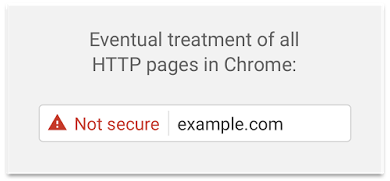
Securing Your Law Firm’s Website Can No Longer Wait
With the upcoming October update of Google’s popular Chrome browser, there will be a major change in the way sites without a secure certificate (SSL/TLS) are treated. New security warnings will be added to pages collecting user data over http and all http pages viewed in incognito mode.
Securing Your Law Firm’s Website Can No Longer Wait Read More